A Movement Lab program
M&M Project — Music & Movement
Making Music Mean More
The M&M Project (Music & Movement) is a free, joyful youth enrichment program that uses voice, rhythm, percussion, group song, and movement to create welcoming spaces where keiki—children and youth—can participate, express themselves, and belong, regardless of prior experience. Music is the vehicle; confidence, self-expression, connection, and belonging are the destination.
What happens in an M&M session
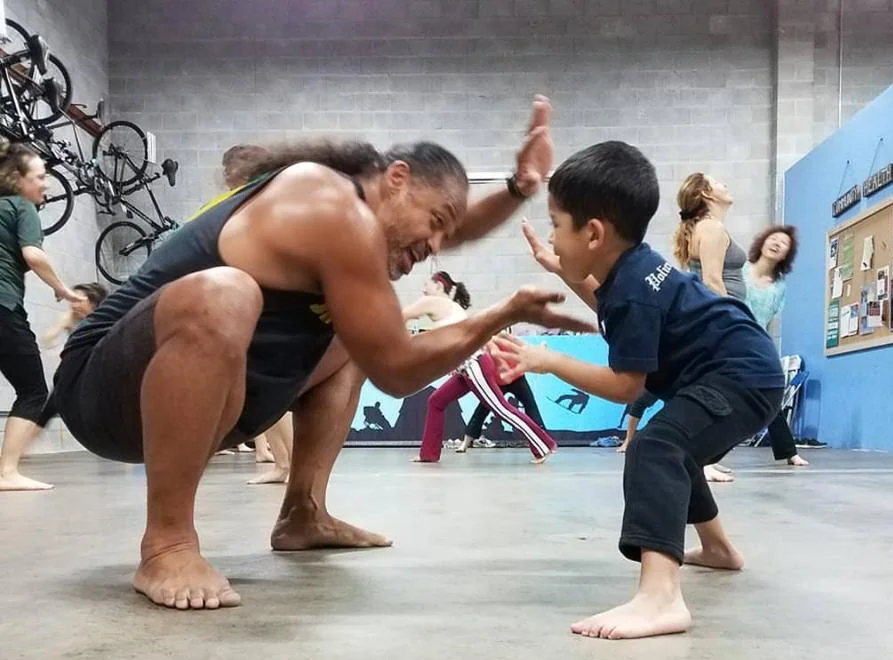
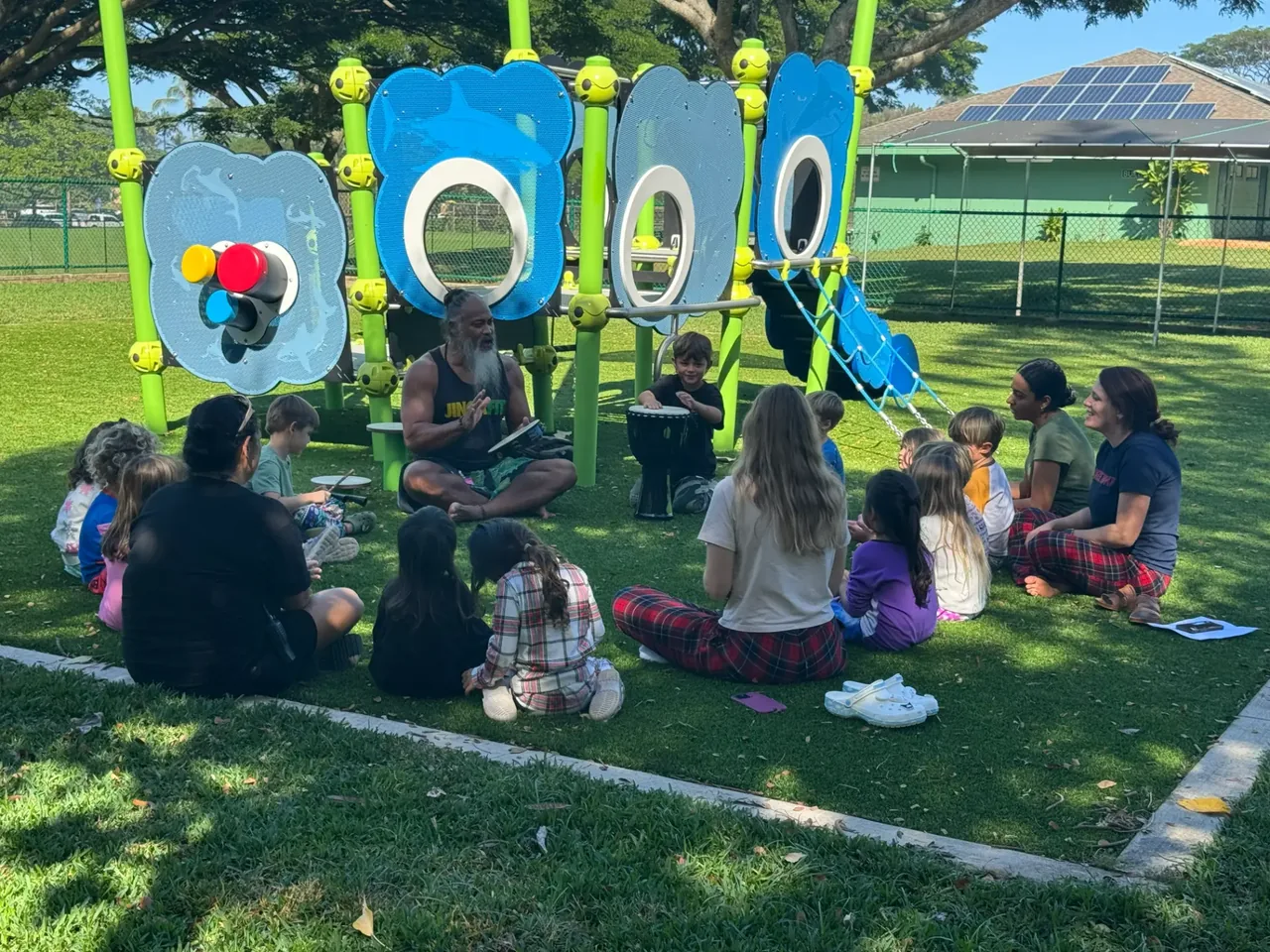
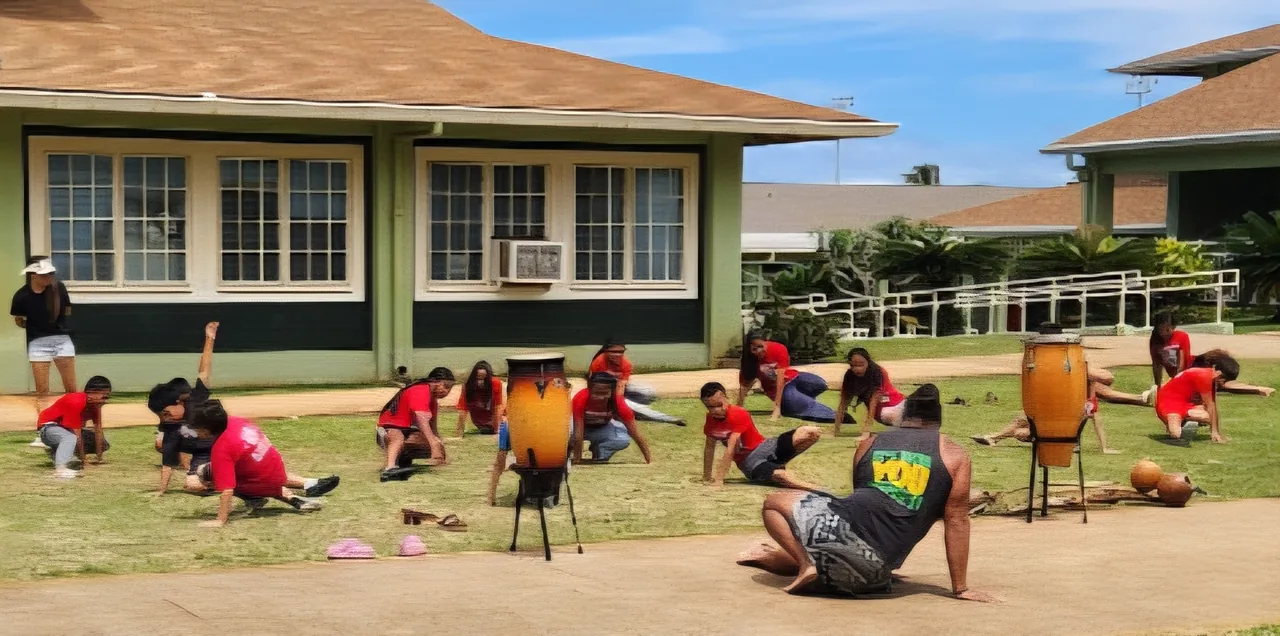
Every session begins with resources every child already has—their voice, hands, rhythm, movement, and imagination. From there, the group builds a shared musical experience one step at a time.
- 1VoiceCounting, rhythm, and call-and-response
- 2HandsClapping and finding a shared beat
- 3PercussionDrums, shakers, bells, and other accessible instruments
- 4Group SongSinging, playing, and creating together
- 5Music + MovementUsing movement to embody rhythm and reinforce learning
No prior music or movement experience is required. Participation comes before performance, and progress comes before perfection.
When approved cultural partners and resources are available, sessions may incorporate Hawaiian, Samoan, and other Polynesian music, movement, and instruments. Not every culture or activity is part of every session.
An optional instrument-building module may be offered during field trips, outdoor sessions, camps, or seasonal programming. It is not part of every standard session.
The CH³ M&M Method
Six principles keep M&M structured, teachable, and replicable across settings.
Music First
Every session begins with voice and hands—resources every child already has.
Movement Reinforces
Movement embodies rhythm and helps make the learning memorable.
Mistake Forward
Progress matters more than perfection. Mistakes are part of learning, and participation is never interrupted by shame.
Minimum Effective Dose
Facilitators provide the smallest helpful input needed for participants to experience progress and build confidence.
Community Circle
When conflict or difficulty arises, the group may pause for reflection, understanding, support, and repair rather than shame or isolation.
Cultural Connection
When culturally appropriate and supported by approved partners, music and movement connect participants with place, heritage, and community.
How M&M supports growth
M&M is designed as a reinforcing cycle. Joy and curiosity create an inviting way to participate. Participation creates opportunities to practice, connect, and build confidence. As keiki continue playing and learning, they can develop focus, responsibility, leadership, and a willingness to share what they know with others.
- 1
Music, Movement, and Fun
A joyful, welcoming entry point that can spark curiosity.
Intrigue → Participation, Clapping, and Singing
- 2
Participation, Clapping, and Singing
Low-pressure, shared activities give keiki accessible ways to join in, contribute, and find their voice.
Confidence → Playing, Learning, and Feeling Good
- 3
Playing, Learning, and Feeling Good
Positive participation creates opportunities to practice, learn, connect, and experience progress.
Discipline → Developing, Teaching, and Thriving
- 4
Developing, Teaching, and Thriving
As skills grow, keiki can help others learn, practice leadership, and contribute to the group.
Sharing → Music, Movement, and Fun
Completing the cycle
When participants share their energy, skills, and encouragement, they help make music, movement, and fun inviting for others—continuing the cycle.
What discipline means here
In this pathway, discipline means focus, patience, consistent practice, responsibility, and continuing through challenges. It does not mean punishment, forced compliance, shame, or harsh correction.
This cycle illustrates M&M’s intended pathway—not a guaranteed or identical outcome for every participant. It shows how joyful, low-pressure participation can create opportunities for confidence, learning, connection, leadership, and community contribution to grow over time.
Who M&M serves
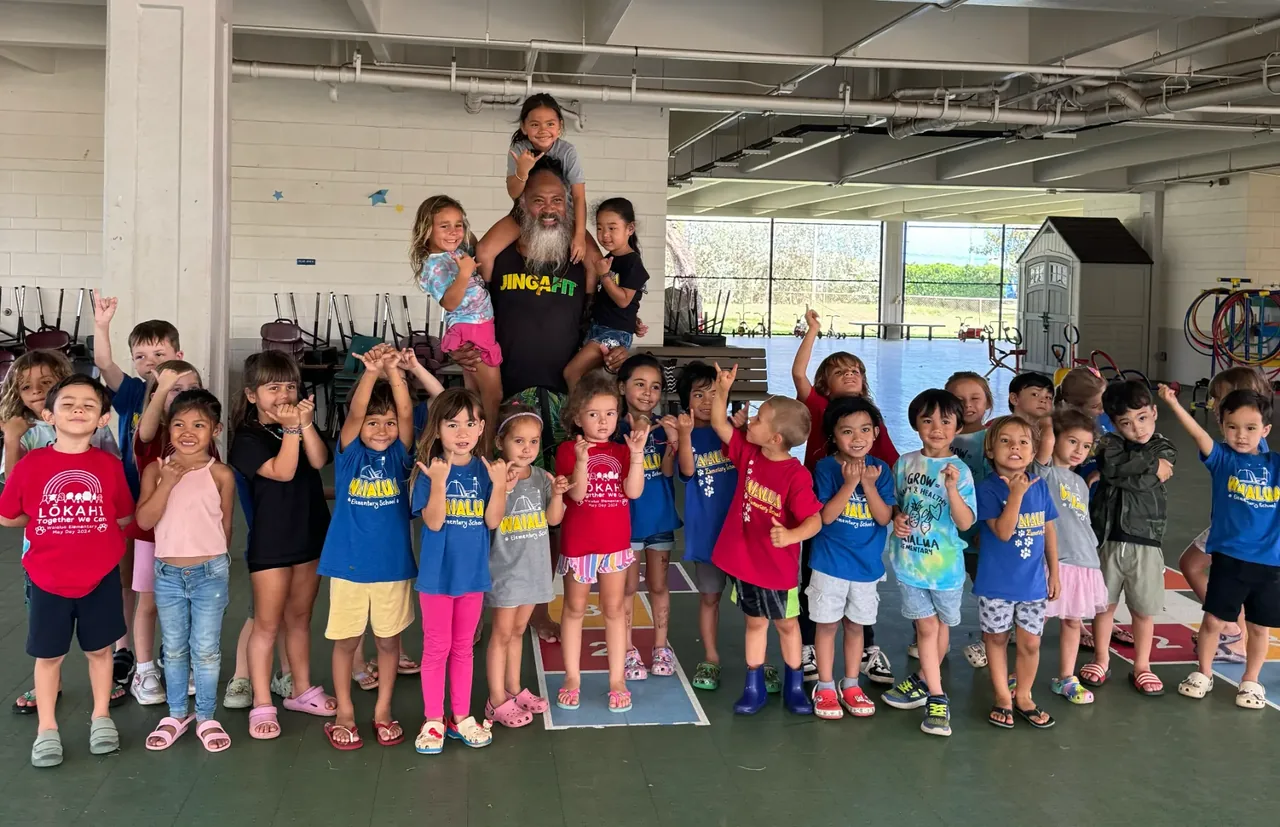
M&M primarily serves elementary-aged keiki, especially young people who have limited access to music and arts enrichment. It offers a gentle entry point for shy or quiet children, keiki from Title I schools and families with limited resources, and Native Hawaiian and Pacific Islander youth who deserve culturally meaningful opportunities to create and participate.
M&M also welcomes older siblings, parents, teachers, and other supportive adults when the setting allows. In community programming, a youth session can become a shared space for the whole ʻohana.
How M&M came to be
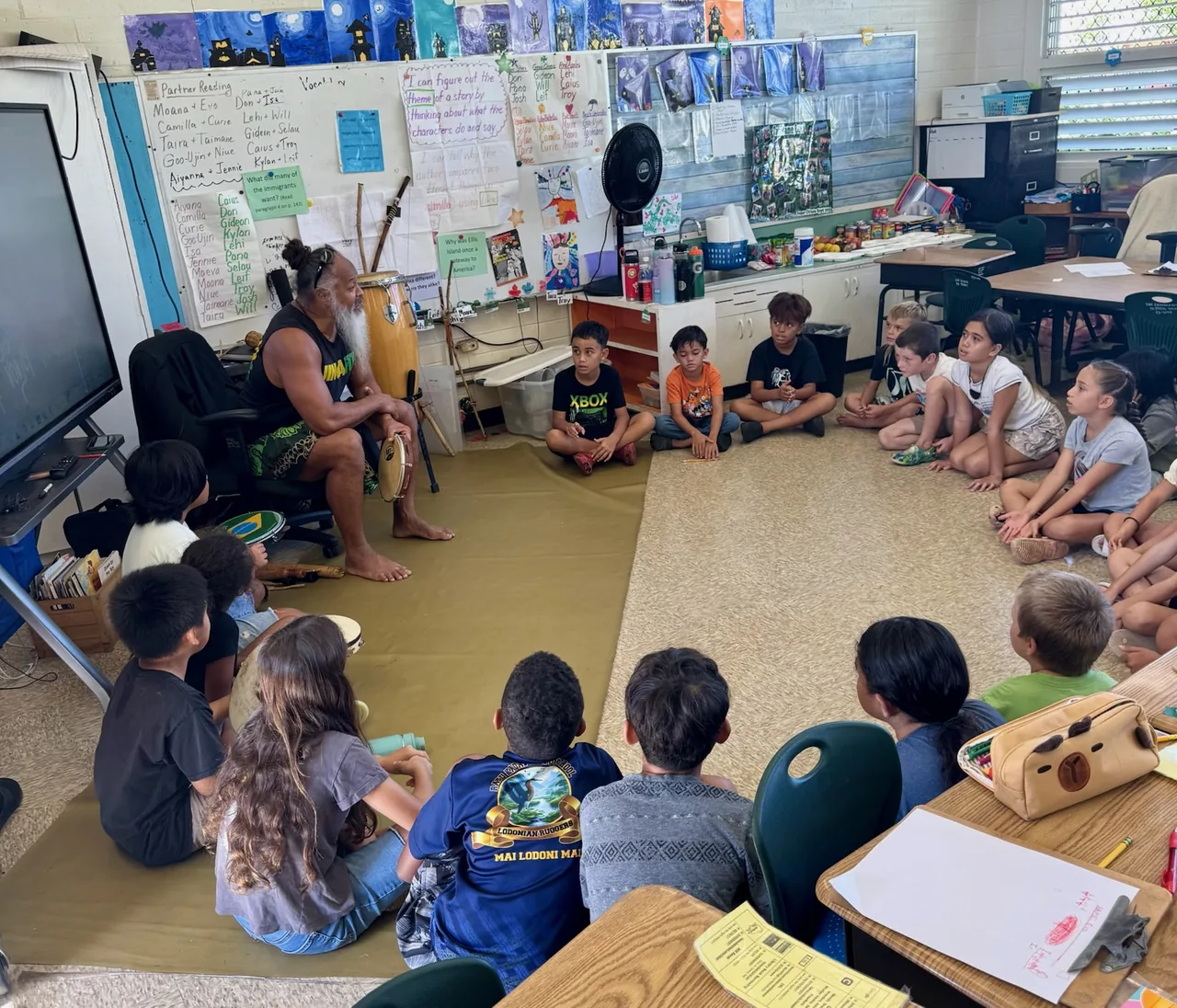
M&M grew from JingaFit, a music-and-movement approach that Branch Nautu developed and refined during his years in Oakland, California, as a Master Teacher with The People’s Conservatory. JingaFit drew inspiration from Capoeira—the Afro-Brazilian art whose music, movement, play, and community practice can create an inviting entry point to discipline, confidence, belonging, and leadership. M&M does not teach or promote Capoeira. It carries forward selected youth-development practices: joy as the doorway, music first, movement as reinforcement, and community as the foundation.
After adults participated in CH³’s earlier R.I.C.E. movement sessions, parents repeatedly asked whether CH³ offered something similar for their children. Branch had already spent years facilitating music and movement with elementary-aged youth in Bay Area schools. M&M brought that experience home and reshaped it around the culture, relationships, and needs of Hawaiʻi’s keiki.
What M&M is—and is not
M&M is a youth-development and community-enrichment program using music and movement as the vehicle.
It is not a traditional music-lesson program—there are no required scales, sheet music, or formal performance standards. It is not a fitness, physical-education, or martial-arts program. Showcases may occur, but they are a joyful result of participation and belonging, not the program’s primary goal.
Free for Keiki and Families
M&M participation is free for the keiki and families it serves. CH³ welcomes grants, school or organizational contracts, sponsorships, donations, and partner funding that make free participation possible.
Bring M&M to Your School or Community
Schools, educators, community organizations, funders, sponsors, and contracting partners can help bring free M&M sessions to the keiki they serve. CH³ welcomes conversations about school partnerships, community programming, sponsorships, and funded services that keep participation free for families.
Partner With CH³M&M provides educational, community-based youth enrichment. It is not medical care or a substitute for advice from a qualified healthcare professional.
Bring Music and Movement to Your Keiki
Tell us who you are looking for, ask about an upcoming opportunity, or explore bringing M&M to your school or community.
Help Keiki Find Their Voice, Belonging and Confidence
Keiki deserve places where they can express themselves, move with confidence, practice shared leadership, and feel that they belong. Your support helps CH³ create music-and-movement experiences that make room for their voices, creativity, culture, and connection.
Online donations support CH³’s general charitable work, not a restricted program fund, and are used where they are needed most across our mission and communities.